Stories From the Road
Explore recent stories from Edventure programs, student experiences and the communities our travellers connect with along the way.
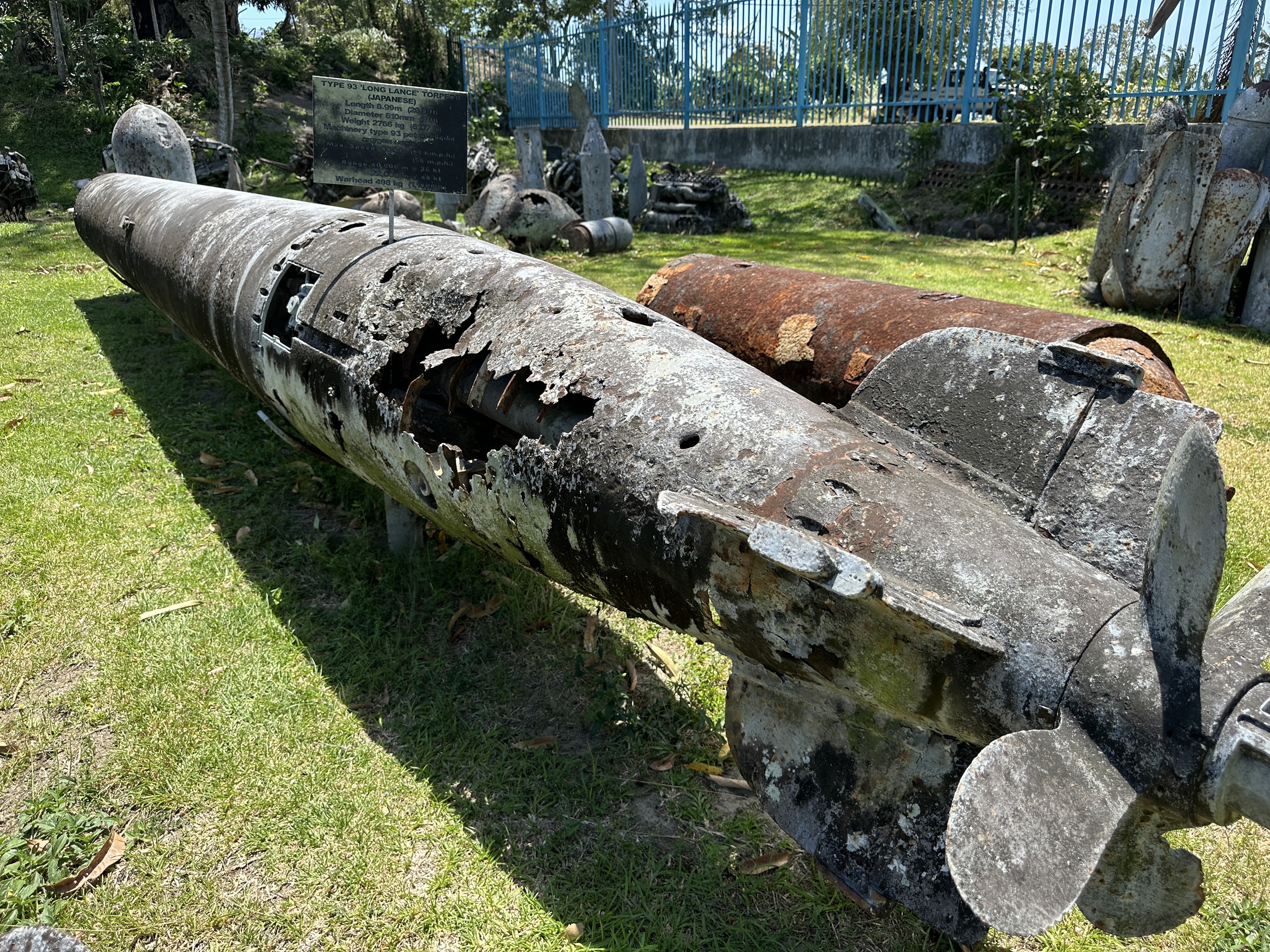
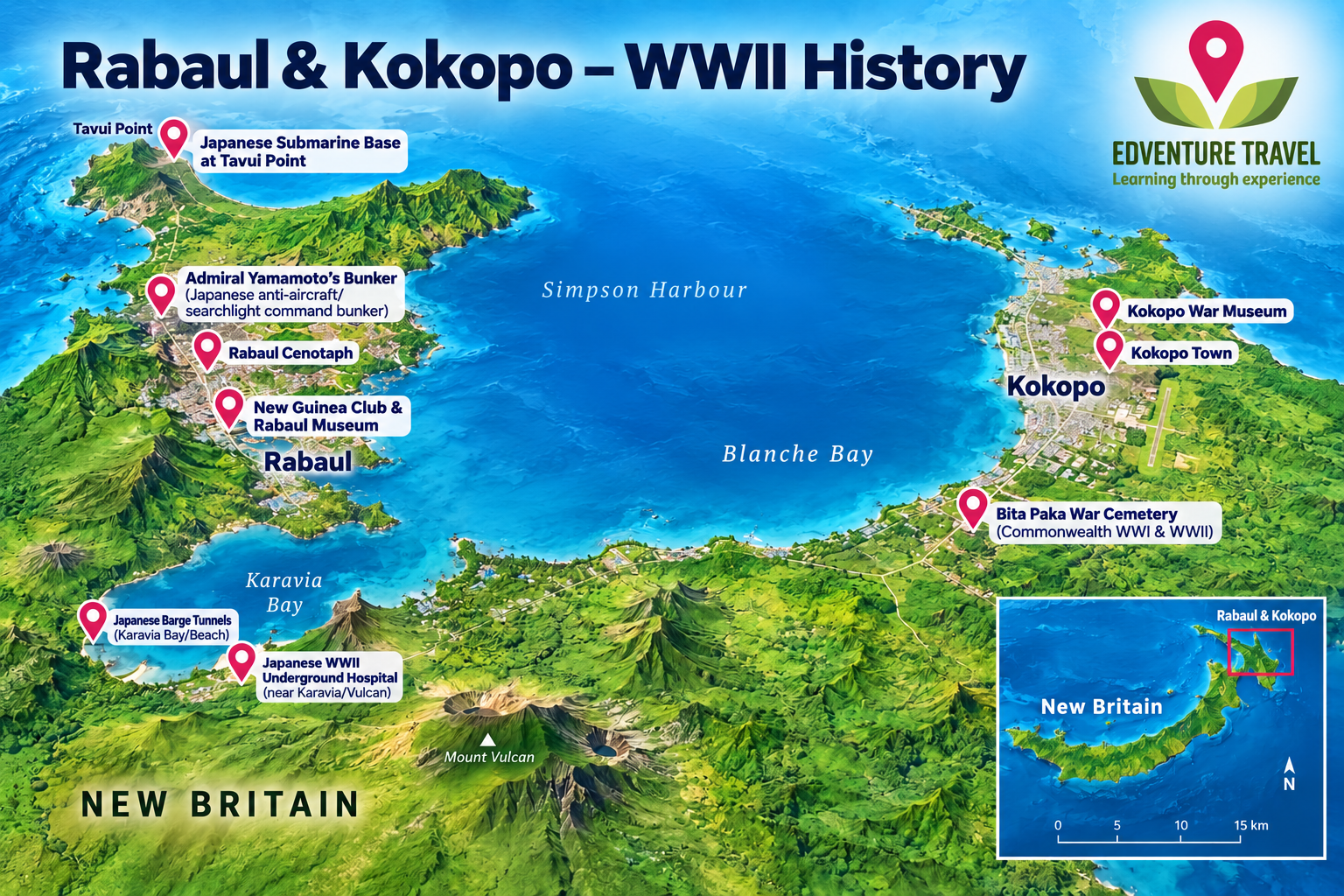
Before the Kokoda Track became one of the best-known stories of Australia’s involvement in the Pacific War, there was Rabaul.
Located on the island of New Britain in what is now Papua New Guinea, Rabaul was one of the most strategically important—and tragic—locations in Australia’s experience of World War II. Its story connects the Japanese advance through the Pacific, the defence of Australia, the Kokoda campaign, Australian prisoners of war and, eventually, the Allied defeat and isolation of one of Japan’s greatest military strongholds in the South Pacific.
At the beginning of World War II, Rabaul was part of the Australian-administered Territory of New Guinea. Its harbour, protected by surrounding volcanic hills, together with nearby flat land suitable for airfields, made it an ideal military base. From Rabaul, ships and aircraft could operate throughout New Guinea, the Solomon Islands and the approaches to Australia.
In January 1942, Rabaul was defended by approximately 1,400 Australian military personnel, principally the 2/22nd Australian Infantry Battalion, together with artillery, engineers, medical personnel and the RAAF’s No. 24 Squadron. Collectively, the force was known as Lark Force.
On 23 January 1942, approximately 5,000 Japanese troops landed around Rabaul. Supported by powerful naval and air forces, they greatly outnumbered and outgunned the Australian defenders. Within hours, communications began to break down, and the Australian position became impossible to hold. The order was eventually given to withdraw, and Lark Force scattered into the jungles and along the coast of New Britain.
Around 400 members of Lark Force eventually escaped New Britain and returned to Australia, often after extraordinary journeys through jungle and along remote coastlines. Many others were captured.
One of the darkest episodes occurred at Tol Plantation in February 1942. Approximately 160 captured Australians were taken into the jungle and murdered by Japanese troops. They were shot, bayoneted or killed in other ways. Remarkably, six men survived and later escaped with assistance from local people.
Hundreds of the Australians and other Allied personnel captured around Rabaul were imprisoned by the Japanese.
On 22 June 1942, approximately 845 prisoners of war and more than 200 civilian internees were loaded aboard the Japanese transport ship Montevideo Maru. The ship departed Rabaul bound for Hainan Island, off southern China. There were no markings identifying it as carrying Allied prisoners.
On 1 July 1942, the American submarine USS Sturgeon encountered the ship off Luzon in the Philippines. Unaware that Allied prisoners were aboard, the submarine torpedoed the vessel. The Montevideo Maru sank rapidly. None of the Allied prisoners or civilian internees survived. More than 1,000 people were lost, making the sinking the deadliest maritime disaster in Australian history.
Rabaul quickly became one of Japan’s most important military bases in the South Pacific. Just six months after its capture, Japanese forces operating from Rabaul began another campaign that would become deeply embedded in Australian history.
On 21 July 1942, Japanese troops landed around Buna and Gona on the northern coast of Papua, approximately 160 kilometres from Port Moresby in a straight line. Between them and Port Moresby, however, stood the enormous natural barrier of the Owen Stanley Range.
Japanese forces began advancing inland towards Kokoda and then south across the mountains. This became the Kokoda Track campaign, fought from July to November 1942.
Australian troops fought a series of desperate battles and delaying actions at locations including Kokoda, Isurava, Eora Creek, Templeton’s Crossing and Ioribaiwa Ridge. At their furthest advance, Japanese troops reached Ioribaiwa, less than 50 kilometres from Port Moresby.
Japan wanted Port Moresby because it was the major Allied base on the southern side of Papua. Capturing it would have strengthened Japan’s defensive perimeter, threatened Allied air and sea communications through the Coral Sea and made Allied operations against Japanese positions in New Guinea and Rabaul considerably more difficult.
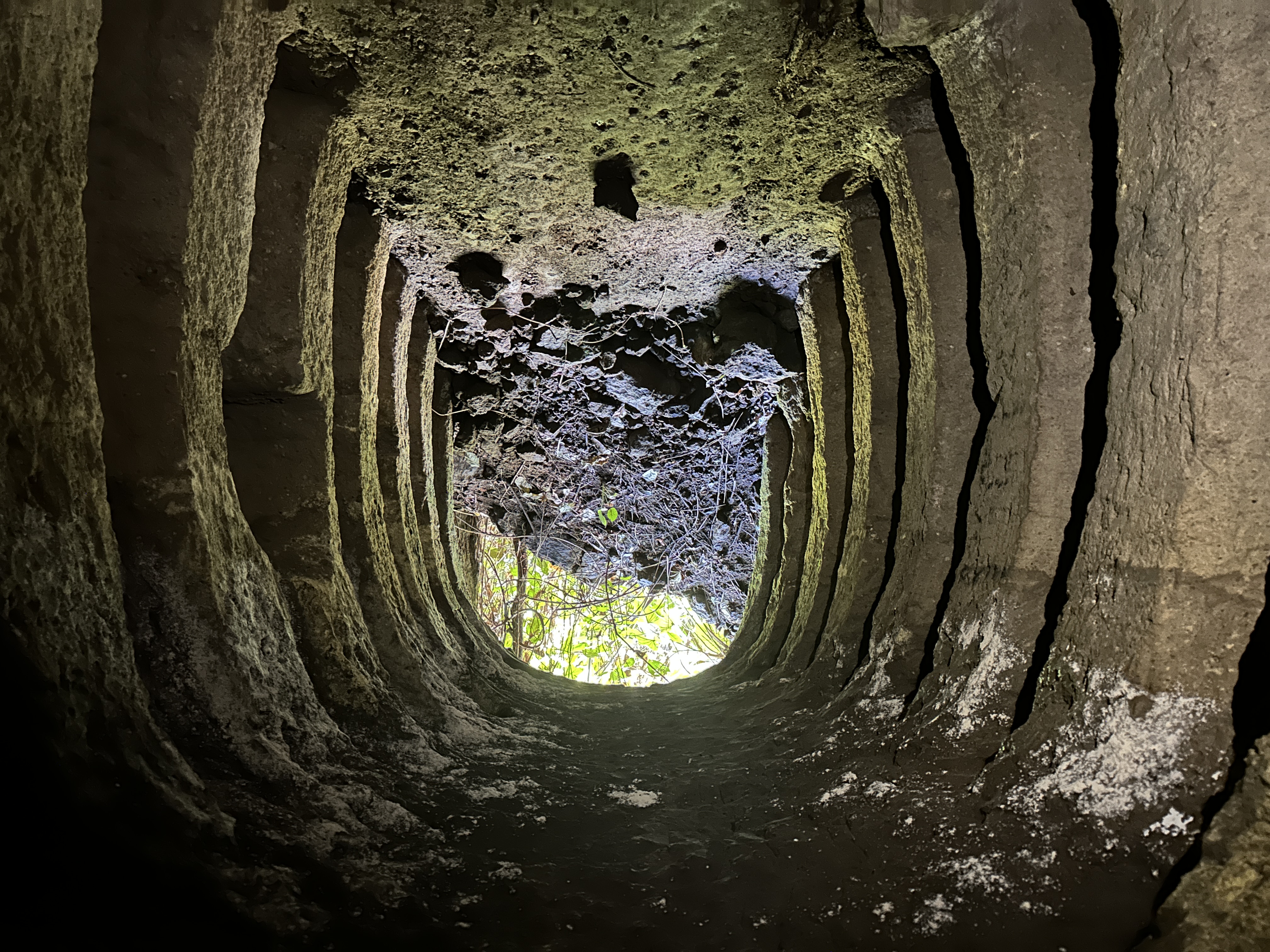
While Australians were fighting on the Kokoda Track and elsewhere in New Guinea, the Japanese continued transforming Rabaul into an enormous military fortress.
Airfields, coastal gun positions, command centres, underground hospitals, ammunition stores, workshops and an extensive network of tunnels were constructed throughout the Gazelle Peninsula. Aircraft, ships, barges, tanks and artillery were positioned around the harbour and surrounding countryside.
Much of this infrastructure was moved underground because of increasingly heavy Allied bombing. The Japanese constructed an extraordinary network of tunnels and caves around Rabaul, with some estimates placing the total length at around 100 kilometres. These underground facilities were used for command posts, hospitals, storage, workshops, ammunition, equipment and protection from Allied air raids.
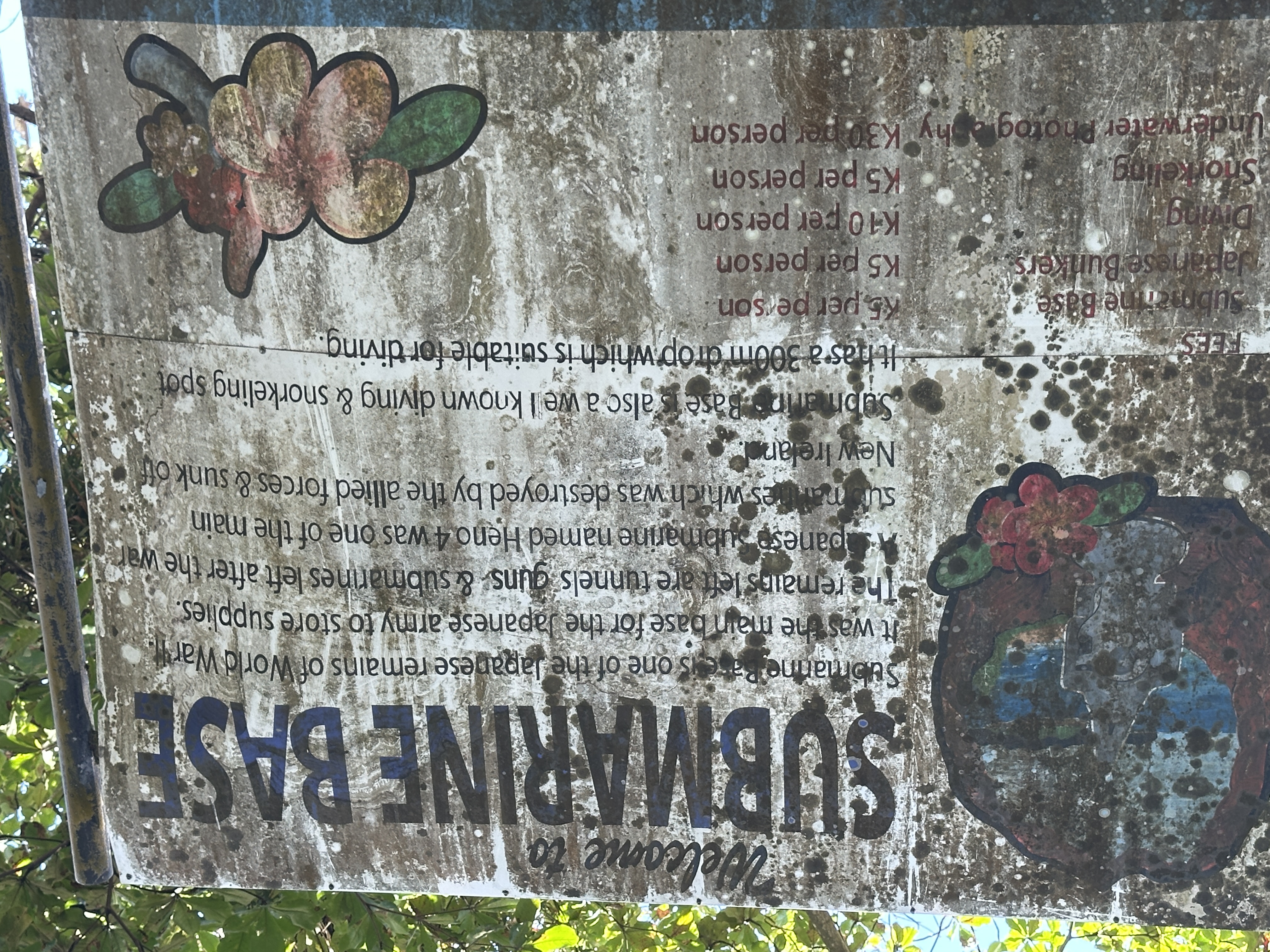
Rabaul also became an important Japanese naval base, including facilities associated with submarines and the large number of barges used to transport troops and supplies around New Britain and neighbouring islands.
By the end of the war, Australian forces discovered just how enormous the Japanese presence had become. In September 1945 there were approximately 57,000 Japanese Army personnel and nearly 32,000 naval personnel in the Rabaul area, in addition to thousands of civilian workers.
Despite Rabaul's importance, the Allies eventually decided that capturing the heavily defended base by direct assault would cost too many lives.
Instead, American and Australian forces gradually bypassed and isolated Rabaul. Allied aircraft repeatedly bombed the airfields, harbour, shipping and military installations, while Allied advances elsewhere in New Guinea, New Britain and the Solomon Islands cut Japanese supply routes.
Australian forces returned to New Britain and fought to contain the Japanese around the Gazelle Peninsula. By the later stages of the war, tens of thousands of Japanese troops remained around Rabaul, but they had effectively been trapped and neutralised.
Rabaul had changed from one of Japan's most powerful offensive bases in the Pacific into an isolated fortress.
Following the atomic bombings of Hiroshima on 6 August 1945 and Nagasaki on 9 August 1945, together with the Soviet Union's entry into the war against Japan, Japan announced its acceptance of surrender terms on 15 August 1945.
The formal surrender of Japanese forces in the Rabaul region took place on 6 September 1945 aboard the British aircraft carrier HMS Glory, positioned off Rabaul.
General Hitoshi Imamura, commander of the Japanese Eighth Area Army, and Vice Admiral Jinichi Kusaka, commander of the South East Area Fleet, surrendered Japanese forces in New Guinea, New Britain and the Solomon Islands to Australian Lieutenant General Vernon Sturdee, commander of the First Australian Army. Imamura placed his sword on the surrender table before signing the instrument of surrender. The surrender formally brought to an end more than three and a half years of Japanese occupation of Rabaul.
More than 80 years later, Rabaul remains an extraordinary place to explore the history of the Pacific War.
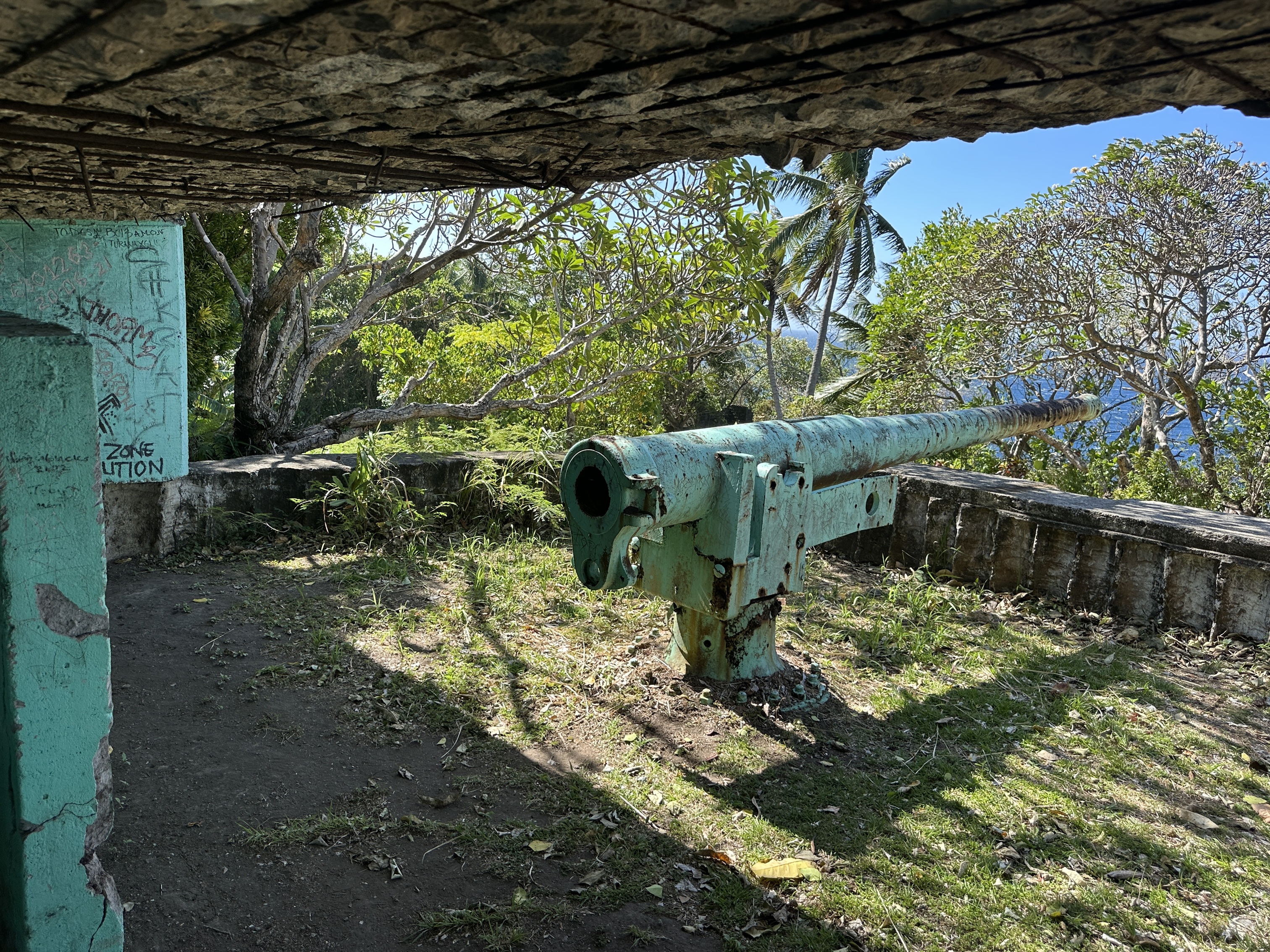
Unlike many former battlefields where little remains, wartime relics are still scattered throughout Rabaul and the surroundings.
What to see:
• Japanese tunnels and underground defensive positions
• underground hospital and storage areas
• Japanese command bunkers and observation positions
• the remains of the Japanese submarine loading base
• coastal artillery positions and large-calibre guns
• Japanese barges and landing craft
• military vehicles and equipment
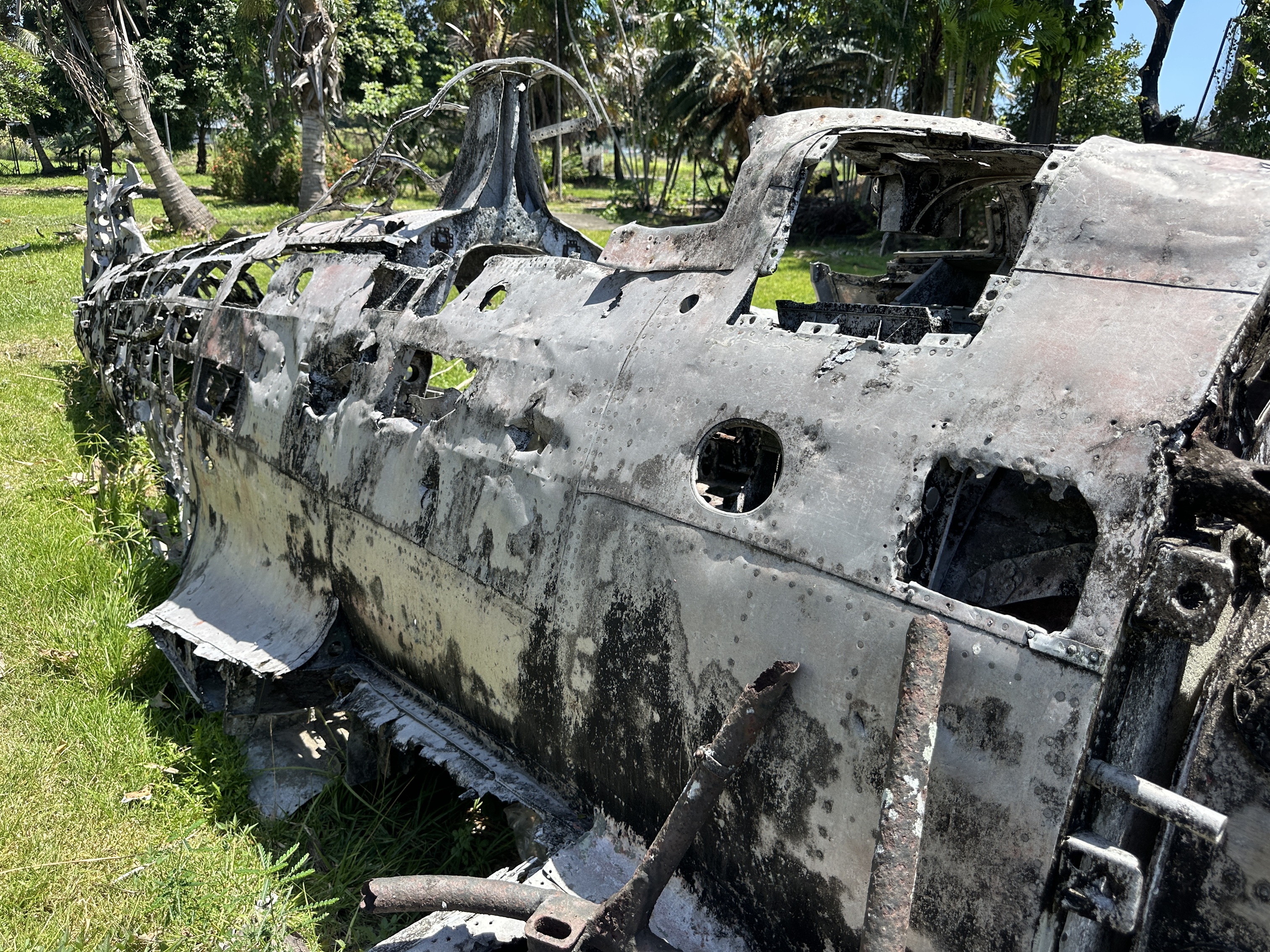
• aircraft wreckage
• bunkers and fortifications
• former airfield sites
• wartime memorials and cemeteries
• collections of Japanese and Allied military artefacts at the Kokopo War Museum
In some places, large guns, machinery and military equipment remain where they were abandoned more than eight decades ago. Jungle has grown around former positions, while tunnels cut into hillsides provide a physical reminder of the scale of the Japanese military presence.
There are also memorials where visitors can reflect on the Australians, Papua New Guineans and others who lost their lives during the fighting and occupation.
For Australian students in particular, Rabaul provides an opportunity to understand that the story of Australia's war in Papua New Guinea did not begin with Kokoda. It began earlier, with the defence and fall of Rabaul in January 1942.
From the defeat of Lark Force, the Tol Plantation massacre and the tragedy of the Montevideo Maru, through to the Japanese advance towards Port Moresby and the battles of Kokoda, Rabaul sits at the centre of a much larger story about Australia's experience of World War II in the Pacific.
Today, its abandoned guns, tunnels, bunkers, aircraft, barges and battle sites allow visitors to step back into that history and explore one of the most important World War II landscapes located so close to Australia.
Rabaul can be combined with one or two other destinations in Papua New Guinea to create a broader educational experience. A logical starting point is the capital, Port Moresby, where students can visit the Australian High Commission, the National Museum and Art Gallery, and Owers’ Corner, the southern end of the Kokoda Track.
Direct international flights operate from Brisbane and Cairns to Port Moresby, with regular domestic flights connecting Port Moresby and Rabaul.
Ready to plan your next trip? Be in touch to discuss how we can tailor an educational tour of Papua New Guinea to align with your school’s curriculum, learning objectives and areas of interest.