
Community projects – or service-learning programs, as they’re known among educators – can be one of the most rewarding parts of your educational tour. But how do they come about?
While there are millions of people we could work with across Asia, connecting with the communities most in need takes research. Here’s how we consult with locals to develop new community projects, based on our recent research trip to Vietnam and Cambodia in June 2022.
Meeting families in Vietnam’s remote northern villages
Travel three hours north of Hanoi, Vietnam, and you’ll find several remote villages. Tucked between mountains and rice paddies, life here seems idyllic.
But to truly understand the complex issues these communities face, and how to go about resolving them, you’ll need a local partner.
Our partners in northern Vietnam include members of the local People’s Committee, as well as village chiefs. In Vietnam, the People’s Committee is like a council. It leads development within a province, district or township, and has administrative authority over that area.
Before we head out into the villages, we meet our local partners to discuss what’s needed and what to expect. For example, they identify ahead of time which families, schools and services in each village are most in need of assistance.
“During our latest research trip, we went into the homes of several families. They were pre-chosen based on criteria like household income, the number of children in their care, the condition of their house, health issues and community support – or rather, the lack of it,” Billy says.
Watch our video to see some of the families we met in Vietnam’s northern villages:
Understanding communities’ genuine needs and goals
Acting as interpreters, the village chief and People’s Committee members help us talk with families to understand their needs and goals.
In some villages, physical repairs and improvements are the top priority.
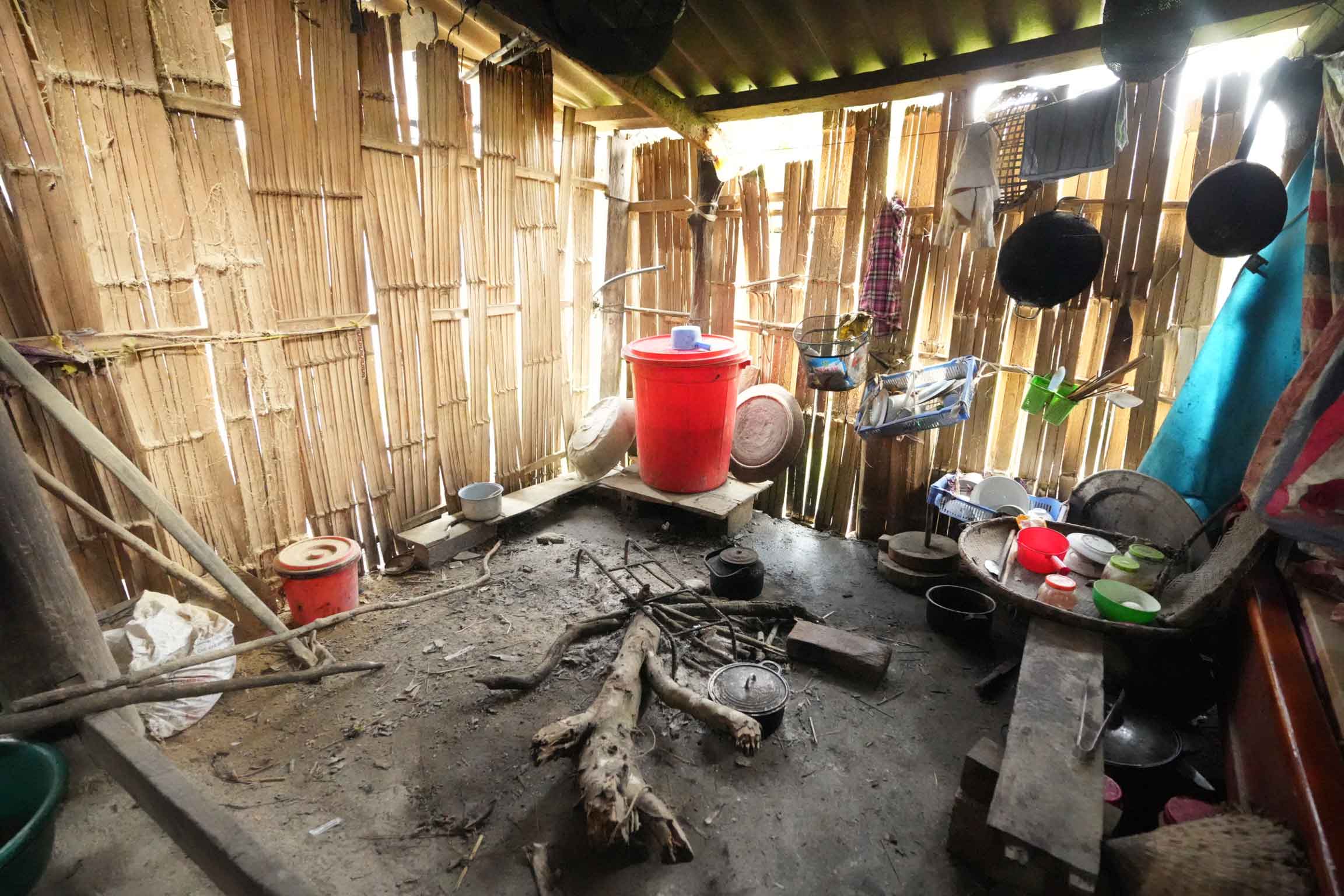
“Some families’ wooden and bamboo houses are leaking and almost falling over. They’d be freezing in winter. Others are without running water or have existing water storage facilities beyond repair. Rooves have missing tiles, and livestock wanders through the villages without suitable pens,” Billy says.
In other villages, education and social services are key. Some families can’t afford to send their children to school. And those children who are lucky to reach school have no uniforms or bikes.
“One school we visited lacked whiteboards and textbooks, there was no library, and the toilets were broken. Windows and door frames needed repairing and painting. In another school, there were just two toilets to service all the students,” Billy says.
“When we asked the school principal what he needed, he replied: ‘Everything.’”
But it’s not just the young who need support.
“Without social services, locals are left to age alone. For some, their partners went off to the city years ago and never returned. Now, they fend for themselves.”
Developing projects with local NGOs: from waste education to mangrove planting
Alongside residential construction and school renovation projects, we also look for other types of programs you can support.
For example, in Cambodia we met with a representative from a local Siem Reap NGO, who took us to visit villages who needed help with rubbish management.
“These villages are desperate for education on rubbish collection, storage and disposal. The NGO worker pitched us a practical program to improve the problem using minimal resources. The funding required will buy equipment, establish storage facilities and deliver educational programs,” says Billy.
This is an example of a community engagement program – a type of program that strives to solve entrenched issues through strong local relationships, such as a partnership with an NGO.
Environmental projects are another option for travellers. And after walking a kilometre through Mekong Delta mud flats, we found the perfect one.
In Vietnam’s Mekong Delta region, erosion from nearby flooded farmland has washed fertile soil out to sea. But by planting mangroves, you can stabilise the shoreline and provide an environment in which fish and birdlife can thrive.
“We met with an organisation undertaking a five-year project to plant mangrove trees. On the shoreline, local teams work in shifts planting trees until the tide comes in – then return the next day to continue planting at low tide. On-site, we discussed logistics, sustainability issues and future planting programs,” says Billy.
Bringing it all together: matching community goals with travellers’ needs
At the end of our research trip, we met with our team to review the list of potential community projects we’d found. We talked through logistics, safety issues and which time of year would be best to undertake each project.
To bring the most to our itineraries, each community project also needs to be within reach of other inspiring educational experiences. So, we reflected on another list we’d made along the way – a record of potential homestays we’d checked out, new trekking routes we’d mapped and even local hydropower dams we’d toured.
Of course, no community project research trip would be complete without checking on some of our previous programs. Near Siem Reap, we headed into the countryside to survey some recent construction projects. Two families had now moved into their houses, thanks to fundraising by an Australian school whose students have been touring Cambodia for over a decade.
“Ecstatic to see us, the first family explained how much their life had improved due to their new living conditions. As they showed off their home, the head of the family offered us each a coconut, which was stock from their new coconut delivery business,” Billy says.
“The second family explained that, thanks to the security of their new home, they now have much better paying jobs in town. Their new home can be locked up when they go out, so working away from home is no longer a problem.”
These families provide just one example of the life-changing impact you can have when you commit to a community project on your educational tour. Whether you choose a construction, environmental or community engagement project, you can be sure your effort will meet a genuine local need and make a lasting difference.
Ready to plan your next trip? Get in touch to discuss your school’s future travel program to Asia or New Zealand. Or for more inspiration, check our gallery of photos from the field, below.
Cambodia photos – available projects (house building and school renovations)


Vietnam photos – available projects (house building and school renovation projects)




Get in touch
Get in touch today to find out more information, request an itinerary or tailor your next trip.


Australia
17 Galtymore Close
Warranwood VIC 3134
Melbourne, Australia
Tel: 61-3-9876 5058
billy@edventuretravel.com.au
Vietnam
73 Ly Nam De Street
Hoan Kiem District
Hanoi, Vietnam
Tel: 84-4-943 8533
info@edventuretravel.com.au
Cambodia
No 62, Street 134
Sangkat Vealvong, Khan 7 Makara
Phnom Penh, Cambodia
Tel: 855-23-885391
mia@edventuretravel.com.au