

Discover Australia’s History – in New Zealand + Pictorial
John Guard - Ex-Australian convict, Australian sealer, New Zealand early settler and whaler
Introduction
Just as whaling was a significant early industry in Australian waters, so it was as New Zealand’s first formal commercial industry. In the early years of New Zealand’s European settlement, 1810s-1820s, the whaling industry was a wild and unruly yet profitable business for hardy seamen and those wanting to see the world or escape life at home. European and Australian sailors headed to New Zealand’s coast in search of employment with ship-based whaling crews. One of these whalers was an ex-convict, John Guard. Guard proceeded to play a pioneering role in New Zealand’s whaling industry and New Zealand’s early settler history overall. His remarkable story is rarely known beyond New Zealand today. Some of the more significant events that John Guard (1792-1857) and his Australian ‘wife’, Elizabeth Guard (1814-1870), were involved in are recounted below.
John Guard was born in England in 1792. Convicted for stealing a quilt in 1813 at the age of 21, he was sentenced to transportation and 7 years hard labour, becoming one of 162,000 convicts whose punishment was exile from British shores to the convict settlements in Australia. After an initial 18 months on board the Newgate hulk, located on the River Thames, Guard boarded the Indefatigable, a square-rigged three-mast ship along with 200 other convicts chained below decks. Conditions were dire on the sea journey of several months to Australia. Fleas, lice, vermin, a pitiful lack of food and diseases were common on convict voyages.
Guard disembarked at Port Jackson (Sydney Harbour) on 25 April 1815, where he was to begin five years of hard labour as part of a convict gang. He soon found himself assigned to Windsor, 50 kilometres north-west of Sydney. Wearing the distinctive yellow and dark grey convict uniform, he broke rocks, felled trees and hoisted timber in weather extremes six days a week. He was released from incarceration in 1820.
Upon release, Guard weighed up his employment options. Instead of heading into farming and land development (convicts were usually offered 20-50 acres of land upon their release), he tried sealing onboard vessels based at Port Jackson. When ships visited Port Jackson in the 1790s and early 1800s, they often anchored near present-day Circular Quay. The Third Fleet, which arrived in 1791, included five ships that began whaling as soon as their convict passengers had disembarked. Britannia, from the Third Fleet, was the first to harpoon a whale that year. Consequently, at the time of Guard’s release, Port Jackson was the home to many seamen, including sealers and whalers, as well as ex-convicts free settlers and traders. Through such intermingling, many ex-convicts went on to try their hand at sealing and whaling.
From Port Jackson, ships sailed the waters of Australia and on to New Zealand, hunting seals and whales. American, New Zealand and French whaling ships also often traded their products through Sydney exporters to reduce Britain’s heavy taxes on imports from foreign countries. New Zealand was also a magnet for British convicts escaping Australia. Sometimes convicts would stow away on trans-Tasman whaling and sealing ships. After arriving in New Zealand, the convicts would often ‘marry’ Maori women, open grog shops for visiting sailors, join shore stations to process whale products, or join other ships sailing to further destinations.
By 1823, as a seaman of whaling vessels, John Guard, by now known in maritime circles as Captain Jacky Guard, began trading with the Māori and plied the seas between Sydney and Taranaki on the west coast of the North Island of New Zealand. Early in 1827, while on one of his regular trading voyages, Guard and crew were caught in a storm and pushed south toward cliffs at the top of the South Island. Luckily an uninhabited beach provided shelter from the storm – Te Awaiti Bay on Arapaoa Island in the Tory Channel of the Marlborough Sounds. Guard sighted a pair of baleen whales (southern right whales). This discovery suggested to him the possibility of establishing a whaling station close to the Cook Strait, the stretch of water that separates the North Island from the South Island, as a whale migration route, thus, rich hunting ground. The southern right whale passed through the Cook Strait between April and September each year and was slow-moving and, therefore, ‘right’ to harpoon.
Within two years, Guard brought a whaling crew from Sydney and established New Zealand’s first land-based whaling station at Te Awaiti Bay in the Tory Channel. Rather than having to hunt the whales from his ship, he set up a shore-based operation, rowing out to kill the whales and then tow them to shore for processing. This whaling station was very likely the first European settlement on the South Island of New Zealand. Te Awaiti Bay proved an ideal location for whaling because it was sheltered from the open sea, had sufficient fresh water and flat land, and was a perfect site from which to head out into Cook Strait. Humpback, right whales and sperm whales frequently travelled between the migration routes and feeding grounds around New Zealand’s coastline and the waters close to Antarctica and the Southern Ocean.
In 1829, the Waterloo, skippered by Guard, accidentally discovered a second ideal location for whaling. Once again sheltering from a storm, the Waterloo anchored overnight in Port Underwood (Te Whanganui), part of Cloudy Bay. While sheltering in a small bay, Guard’s crew saw several whales and calves, and he decided to open a second whaling station here. Guard commuted between his two whaling stations for several years and eventually sold the Te Awaiti station in the Tory Chanel in favour of Kakapo Bay in Port Underwood.
Yet, his ship, the Waterloo, was used to transport flax, whale oil and seal skins to Sydney several times per year, returning with supplies and other goods to trade. In February 1830, Guard delivered 2,300 litres of whale oil to his former home of Sydney Harbour, being the first time whale oil had been exported from New Zealand. While in Sydney, he partnered with 15-year-old Elizabeth (Betty) Parker from a local ex-convict family with whom Guard was friendly.
In November 1830, Guard and Betty left Australia for Te Awaiti Bay in the Tory Channel of the Marlborough Sounds to live at Guard’s whaling station. This move made Betty very likely the first woman of European descent to settle on the South Island. In 1831, she gave birth to a boy at Te Awaiti Bay named John Guard (Jnr). Sometime before 1833, the Guards moved permanently to Kakapo Bay in Port Underwood to hunt southern right whales and humpback whales. Betty gave birth to her first daughter, Louisa Guard, in November 1833. Both children likely were the first boy and girl of European descent to be born on the South Island. Guard around this time purchased the exclusive rights to Kakapo Bay from the Māori Chief Te Rauparaha and Te Rangiheata, paying for the rights with goods and gifts that likely included tobacco, bolts of cloth, axe heads, cooking pots, and blankets. Kakapo Bay now became commonly known as Guards Bay.
On 29 April 1834, the Guards were returning from Sydney aboard the barque Harriet when it was driven ashore in a gale off the Taranaki coast of New Zealand’s North Island. John, Betty and their children were taken hostage by a Māori community. Betty narrowly escaped death when a tomahawk blow to her head was deflected by the large tortoise-shell comb she wore in her hair. Teeth from the comb were lodged in her head as a result. John Guard negotiated his release on a promise to return with a ransom payment. He then returned to Sydney where, he notified the New South Wales authorities and the Executive Council as to the plight of his family in New Zealand.
In late September 1834, Guard returned from Sydney to New Zealand with a military rescue party. This included the man-of-war HMS Alligator, captained by Robert Lambert, and the colonial schooner Isabella, led by captain Johnson, carrying a detachment of 25 men from the 50th Regiment and 40 other rank-and-file soldiers. They negotiated and fought for the Guard party’s release and then continued fighting after securing the release. These were the first British troops to come into armed combat with Māori on New Zealand soil.
The Harriet Affair, as the incident came to be known, caused intense controversy. While the Sydney press said everybody in New South Wales from Governor Richard Bourke to Captain Robert Lambert “are entitled to the highest praise”, James Busby, the official British Resident in New Zealand, called it “frontier chaos”.
In 1836, the Guard family returned to live at Kakapo Bay (Guards Bay) at Port Underwood. During the whaling season that year, the industry’s peak, Port Underwood had six shore-whaling stations, 80 boats and employed 500 men on the boats; generally escaped convicts, ex-convicts, pirates and adventurers from America, France and Africa. The men drank hard liquor. Around this time, Betty gave birth to three more children: Thomas in 1835, Charles in 1836 and Amelia in 1840.
Guard’s whaling enterprise at Kakapo Bay (Guards Bay) employed Māori sailors and shore-based workers. Guard also traded with the local Māori and supplied them with sought-after items, including blankets, clothing, tobacco and metal tools. Guard became a key mediator between Europeans and Māori in the region, including the powerful Māori chief Te Rauparaha of the Ngati Toa tribe. Visiting British dignitaries would usually stay at Guard’s house and go through him to speak with chiefs of local iwi (tribes).
Guard’s local knowledge, mediation skills and close association with the Māori led to him becoming part of a significant event in New Zealand’s history. He met the British delegation and Māori chiefs that signed a copy of the Treaty of Waitangi on 17 June 1840, at Port Underwood, Cloudy Bay.

Earlier in the year, Lieutenant-Governor William Hobson, having left Australia aboard the HMS Herald with a guard, a party of civil servants, and three troopers of the New South Wales mounted police, sailed to the North Island of New Zealand, with the explicit aim of obtained sovereignty over New Zealand for the British Government. The day after his arrival, Hobson read two proclamations, the first extending the jurisdiction of New South Wales over New Zealand with his appointment as Lieutenant-Governor, and the second, halting further land purchases. Over the following days, the Treaty of Waitangi was drafted in English, then translated into Māori, and signed by Lieutenant-Governor Hobson and 40 Māori chiefs at Waitangi in the Bay of Islands, on 6 February 1840.

This controversial Treaty, which was more of an agreement than a treaty, gave the British the right to establish a Government of New Zealand, consider Māori land rights, and give the Māori the rights of British subjects. Effectively in the eyes of the British, the Māori were ceding sovereignty to the Crown. The Treaty was initially signed by 40 Māori chiefs from the North Island of New Zealand. Eight copies of the Treaty were then created and taken around the country to be signed by other Māori chiefs over the coming months. The last signature was obtained on 3 September 1840. Over 500 signatures were obtained on the Māori translated document, while only 39 signatures were obtained on the English version. A key discrepancy between the English and Māori versions of the Treaty was the translation of the word ‘sovereignty’. The English version of the Treaty states that the Māori cede ‘sovereignty’, while the Māori version states ‘kawanatanga’, the right of governance. Sovereignty had no direct equivalent in the context of Māori society. Nevertheless, British sovereignty over the country was proclaimed by Lieutenant-Governor William Hobson on 21 May 1840. The British government ratified his proclamations in October 1840. The controversial Treaty is seen as New Zealand’s founding document.
After the initial signing of the Treaty at Waitangi on 6 February, more Māori signatures were still being sought. On 16 June 1840, HMS Herald arrived in Port Underwood with Major Thomas Bunbury (on behalf of Lieutenant-Governor William Hobson), Joseph Nias (Captain), William Stewart (Pilot) and Edward Williams (interpreter) on board, bringing one of the eight copies of the Treaty of Waitangi for the South Island chiefs to sign. Bunbury first went ashore at Guards Bay, where he recorded meeting John Guard. However, no signatures were immediately obtained at Guards Bay. On 17 June, the signing of the Treaty took place onboard the HMS Herald, where nine chiefs’ signatures were collected.
After the chiefs signed the treaty sheet, Major Thomas Bunbury decided he had collected enough signatures, and that ceding was complete. The officers and marines of the Herald then landed at the Māori pa on the island of Horahora Kakahu, a short distance from Kakapo Bay (Guards Bay). Here the Union Jack was raised, and Bunbury proclaimed sovereignty over the South Island of New Zealand on behalf of the British Government. Cheers from the onlookers followed a 21-gun royal salute. This event was witnessed by five American, one French, and one German ship, as well as whaling vessels in the bay at the time.
Bunbury’s copy of the Treaty, containing the nine Māori signatures obtained at Port Underwood and, two days later Te Rauparaha’s signature on Mana Island, ended up with a total of 27 signatures by the end of June. This copy of the Treaty, hosted and facilitated in part by John Guard, became known as The Herald-Bunbury copy of the Treaty – Sheet 7 (some sources refer to it as Sheet 8).


After the HMS Herald left the shores of Port Underwood, the Guards continued living and whaling in Kakapo Bay (Guards Bay). Betty gave birth to two more children: Emma in 1842, and Helen in 1847. Sometime before 1848, John Guard retired from whaling, and the family fished, farmed cattle, goats, pigs and grew fruit to sell. Betty gave birth to her last two children, twins Edward and Susan, in 1850. John Guard died in 1857, aged 65 years old. Betty, having given birth to eight children, and having lived a tough life as a female settler, passed away in 1870 at the age of 56, thus ending the Guards story.
Close to the road today, running through Kakapo Bay in Port Underwood, sits a Whalers Memorial historical marker, one of the Guard’s old whaling tripots and an old cannon. This spot signifies the site of the first land-based whaling station established in Port Underwood. Forty metres behind the Whalers Memorial, on a slightly elevated area at the base of a hill, lies the Guard family cemetery where John and Betty Guard and sixteen other family members rest (as of 2023). The headstones all face towards the water’s edge of Kakapo Bay, where whales once roamed, whaling vessels once moored, the HMS Herald once visited, and where one can see Horahora Kakahu Island, close to the spot where the Herald-Bunbury copy of the Treaty of Waitangi was signed.


John and Betty Guard’s life stories are remarkable. They are stories that encompass convict transportation from England to New South Wales, sealing in Port Jackson, early pioneer whaling in New Zealand, kidnap and ransom, negotiations and other dealings with Māori tribes and chiefs, being involved in the first British/Māori battle in New Zealand, meeting British officials for the signing of the Treaty of Waitangi, and Betty’s giving birth to eight children in a tough environment enduring many hardships. Theirs are also stories of Australia’s and New Zealand’s shared and often intertwined early settler society histories.
Hundreds of descendants of the above peoples live around New Zealand today, some of whom still own land and live in Kakapo Bay and the adjoining bay. Items formerly belonging to John and Betty Guard are held in the Museum of New Zealand Te Papa Tongarewa (Wellington). The Guards’ history is known to some in Marlborough, especially a few historians and passionate staff at the Marlborough Museum, The Edwin Fox Ship & Visitor Centre and the Picton Heritage and Whaling Museum. However, the Guards’ story in full is little known across the Tasman Sea, until now.
A Cultural Heritage Tour to Marlborough
A specialised history and heritage tour can be arranged by Edventure Travel to Marlborough that incorporates many significant sites and vestiges of the early settler New Zealand days with an astounding number of direct links or significant similarities to Australia’s early settler history. The tour can include visiting the Guards’ whaling stations at Te Awaiti Bay in the Tory Channel and Kakapo Bay in Port Underwood. It can also include visiting the Edwin Fox Ship & Visitor Centre, which houses the world’s only surviving convict transport to Australia (Swan River Colony, 1858). Visits to the Marlborough Museum and Picton Heritage and Whaling Museum reveal more links to early Australian settler histories. Additionally, a trip out to historic Canvastown and the Wakamarina River 1860s goldfields site would reveal the stories of Australian gold miners chasing their fortunes and the infamous ‘Maungatapu Murders’ involving the Kelly-Burgess Kelly Gang of Australian bush rangers. The itinerary can include a memorable boat cruise to Ship Cove (Meretoto) in the Marlborough Sounds, the site where Captain James Cook anchored five times. He spent nearly three months replenishing stocks during his three voyages circumnavigating New Zealand and Australia between 1769-1777 on the Endeavour, Resolution (and Adventure), and Resolution (and Discovery).
An Edventure Travel tour can explore two other world-class museums. One is the Museum of New Zealand Te Papa Tongarewa in Wellington, full of national treasures, including the impressive WWI ANZAC exhibition titled ‘The Scale of Our War’. The other is Omaka Aviation Heritage Centre in Blenheim, with its massive WWI section containing aircraft, rare personal items and a display of the crash site of the Red Baron who was shot down behind Australian lines. The WWII section contains relics and aircraft from the Battle of Britain, where 135 New Zealand and 32 Australian crew fought in the skies against the Germans in 1940. Most of the rare WWI aircraft and items in this museum have been loaned by Sir Peter Jackson the famous movie director who has a passion for history.
Contact us to discuss a tour that includes facets of Australia’s interesting history – in Marlborough, New Zealand!

Pictorial
Please enjoy the extensive series of photos revealing Marlborough’s historic sites. Many of these photos were taken by our Director, Billy Penfold, while researching the region in 2022 and 2023.


References
Books
Grady,D. (1978). Guards of the Sea. Whitcoulls Publishers
McNab,R. (1913). The Old Whaling Days. Golden Press
Orange,C.(2017). Te Tiriti O Waitangi – The Treaty of Waitangi 1840. Bridget Williams Books
Reed.A.H & Reed. A.C. (1951) Captain Cook in New Zealand. The Journals of Captain James Cook. Reed.A.H & Reed. A.C.
Reed.A.H & Reed. A.C. (1969) Captain Cook in Australia. The Journals of Captain James Cook. Reed.A.H & Reed. A.C.
Wilson,D.(2018). Whaler by Providence, Patrick Norton in the Marlborough Sounds. River Press
Websites
Indefatigable voyage to New South Wales, Australia in 1814 with 201 passengers.
The Convicts’ Colony.
Start of whaling.
Sydney’s Whaling Fleet.
John Guard.
The Guard Family of Kakapo Bay.
Te Whanganui – Port Underwood Heritage Trail – Port Underwood, Aotearoa, New Zealand.
Cloudy Bay, 17 June 1840 – Treaty Signing Locations.
Hearld Bunbury treaty copy.
Special Thanks
Narelle Guard. Kakapo Bay, Marlborough New Zealand (interviews and guiding)
Dr. Rosalie Triolo. Melbourne, Australia (consulting and editing)
Stephanie Moore – Picton Heritage & Whaling Museum. Marlborough, New Zealand (reference suggestions and maps)
Beachcomber Cruises. Marlborough Sounds, New Zealand (guiding and chartered boat to Te Awaiti Bay, Fishermans Bay, Ship Cove, and Motuara Island)


Get in touch
Get in touch today to find out more information, request an itinerary or tailor your next trip.


Australia
17 Galtymore Close
Warranwood VIC 3134
Melbourne, Australia
Tel: 61-3-9876 5058
billy@edventuretravel.com.au
Vietnam
73 Ly Nam De Street
Hoan Kiem District
Hanoi, Vietnam
Tel: 84-4-943 8533
info@edventuretravel.com.au
Cambodia
No 62, Street 134
Sangkat Vealvong, Khan 7 Makara
Phnom Penh, Cambodia
Tel: 855-23-885391
mia@edventuretravel.com.au


Bustling Ho Chi Minh City + Video
The largest city in Vietnam with a population of over nine million, Ho Chi Minh City offers a plethora of interesting sites and attractions. Bustling Chinatown reveals the merchant nature of the ethnic Chinese who have traded here for over 300 years. The city centre reveals its French colonial past with beautifully restored colonial-era buildings, including the city Post Office and Nore Dame Cathedral. One must not overlook the Vietnam War-era historic sites and museums – the Reunification Palace from where South Vietnam ran its war effort, to the confronting War Remnants Museum, revealing the horrors of war from a local perspective.
Ho Chi Minh City is also the gateway to many attractions in the south of the country, the Cu Chi Tunnels, Long Tan Cross Memorial, and the breadbasket of the country – the Mekong Delta.
Enjoy our short video revealing the city’s essence, the hive of activity, and its people.
Ready to plan your next trip? Get in touch to discuss your school’s future travel program to Asia or New Zealand.
Get in touch
Get in touch today to find out more information, request an itinerary or tailor your next trip.
Australia
17 Galtymore Close
Warranwood VIC 3134
Melbourne, Australia
Tel: 61-3-9876 5058
billy@edventuretravel.com.au
Vietnam
73 Ly Nam De Street
Hoan Kiem District
Hanoi, Vietnam
Tel: 84-4-943 8533
info@edventuretravel.com.au
Cambodia
No 62, Street 134
Sangkat Vealvong, Khan 7 Makara
Phnom Penh, Cambodia
Tel: 855-23-885391
mia@edventuretravel.com.au

Students participate in the ANZAC Day event in Singapore (+ Photos)
Edventure Travel organised the 2023 Simpson Prize Commemorative Study Tour to Singapore in April. Eight students, two teachers and an accredited Australian War Memorial historian from Canberra participated in this week-long historical, cultural and commemorative experience.
Students toured and learned about prominent historical locations associated with World War II and the Japanese occupation of Singapore. It involved travelling to the sites of the Allied surrender, the Japanese invasion landing beaches, and the infamous Changi Prison and Chapel. The tour group subsequently explored the Battle Box, a former British underground command bunker, Selarang Camp Barracks, Changi Military Hospital, Fort Canning, and Fort Siloso. Students also investigated Singapore’s Muslim Quarter – Kampong Glam, Little India, Chinatown, the Night Safari, and Sentosa Island.
Attending the ANZAC Day Dawn Service at the Kranji Cemetery was arguably one of the trip’s most memorable and moving experiences. One of the students had the honour of reading Clyde Hamilton’s poem “Not a Hero” to an audience of more than 600 people.
Our accompanying Australian War Memorial historian presented the background and perspective of Singapore’s military history. Upon returning to Australia, one of the accompanying teachers reflected on the 2023 Simpson Prize Commemorative Study Tour.
“The trip was an amazing experience, and the ANZAC Day service was particularly moving. Singapore is incredibly interesting, and I certainly learned a lot more than I knew about the Japanese invasion and subsequent events in the following years. Our trip was well planned, and everything went really well….Some students did not want to leave! I feel very honoured to have been part of this experience. It has been an absolute highlight of my career.”
– Teacher Susan Ridley – St Michael’s College, QLD. April 2023.


Ready to plan your next trip? Get in touch to discuss your school’s future travel program to Asia or New Zealand. For more inspiration, check our gallery of Singapore photos, below.
Get in touch
Get in touch today to find out more information, request an itinerary or tailor your next trip.
Australia
17 Galtymore Close
Warranwood VIC 3134
Melbourne, Australia
Tel: 61-3-9876 5058
billy@edventuretravel.com.au
Vietnam
73 Ly Nam De Street
Hoan Kiem District
Hanoi, Vietnam
Tel: 84-4-943 8533
info@edventuretravel.com.au
Cambodia
No 62, Street 134
Sangkat Vealvong, Khan 7 Makara
Phnom Penh, Cambodia
Tel: 855-23-885391
mia@edventuretravel.com.au

Student Testimonials
A recent school excursion across Cambodia organised by Edventure Travel proved to be a life-changing experience for many of the students and teachers. We requested that the students and teachers respond to a few questions about their experiences on the final day of the tour. What they said is as follows:
What life skills did you learn during the tour?
“I gained resilience, public speaking skills, the ability to read the room and adjust. I learned teamwork and patience with the building project and a great sense of accomplishment when we finished it.”
– Heather N, student.
“How poverty affects the lives of everyone it touches and how I am grateful for my life.”
– Imala W, student.
“Gratitude and to take every chance and enjoy every moment.”
– Tom O, student.
“Being with the same group for a long period of time taught me to understand people are different.”
– Ruby C, student.

List your trip highlights
“Teaching local kids changed my sights on how lucky we were and are. I learned the ways of travel whilst also helping others.”
– Jaxon S, student.
“The temples and learning about Cambodia history complements my history course nicely. I loved looking at the sculptures and engravings at the temples and deciphering their meanings and discovering what they can tell us about the past.”
– Kate W, student.
“Elephant sanctuary, temples (in particular the Bayon), teaching at our sister school Krou Yeung, Tuol Sleng Genocide Museum.”
– Matilda W, student.

What would you say to other students considering an Edventure Travel tour?
“Do it. Edventure tours are an amazing experience unlike any other trip. You experience so much that you otherwise wouldn’t and with local guides and their knowledge you learn so many things about the country.”
– Ruby C, student.
What did you think about your tour leader and the local guides?
“The guides and leader were some of the happiest enthusiastic friendly people I have ever met. They create a great atmosphere and interact extremely well with the students.”
– Jasper, student
Teacher comments
“We did a lot. But we are here for the experiences, and we certainly got that. I think the trip was well planned out and flexible enough. I loved it. I love Cambodia. It was everything a cultural tour should be. Great insights and lessons.”
– Natalie T, teacher.
“Great understanding of privilege and impacts of poverty.”
– Mick K, teacher.

Get in touch
Get in touch today to find out more information, request an itinerary or tailor your next trip.
Australia
17 Galtymore Close
Warranwood VIC 3134
Melbourne, Australia
Tel: 61-3-9876 5058
billy@edventuretravel.com.au
Vietnam
73 Ly Nam De Street
Hoan Kiem District
Hanoi, Vietnam
Tel: 84-4-943 8533
info@edventuretravel.com.au
Cambodia
No 62, Street 134
Sangkat Vealvong, Khan 7 Makara
Phnom Penh, Cambodia
Tel: 855-23-885391
mia@edventuretravel.com.au

Cultural immersion in a remote Thai Village + pictorial
Southeast Asian countries are home to many tribal ethnic minorities, including the Palong (Dara-ang in Burmese), who fled Myanmar in the 1980s and now reside in the mountainous district of Chiang Dao, Chiang Mai province. They live in traditional villages nestled in valleys, close to streams, fertile land, and surrounded by mountains. One such village is Mae Jon, where the village elders have set up a homestay to encourage travellers to experience their unique culture, customs and costumes.
Edventure Travel has a close relationship with the villagers of Mae Jon and is pleased to support the community by bringing groups to their village as part of a cultural immersion program. Engaging programs have been designed in consultation with village elders and the wider community. Student and private groups have the opportunity to engage in a combination of activities and service-learning initiatives. These may include traditional cooking, cultural dance and music performances. There is also trekking to nearby Palong villages, learning the stories of displaced persons and loss of cultural identity, and discussing village self-sustainability and allocation of scarce resources. There are physical project-based activities such as a 3-day house building project working alongside local builders and the community, as well as a water reservoir and purification project, shed building project to store crops, different forest and habitat rejuvenation projects, and local minority school renovation and improvement projects.
Chiang Dao district offers a range of outdoor and adrenaline-based activities, including white water rafting, bamboo rafting, zip line, bicycle riding, Mae Ngat Lake kayaking, the elephant sanctuary, waterfalls, and hot springs. Contact us to find out how we can design a program that meets all your needs.
Please enjoy our pictorial, below.


Get in touch
Get in touch today to find out more information, request an itinerary or tailor your next trip.
Australia
17 Galtymore Close
Warranwood VIC 3134
Melbourne, Australia
Tel: 61-3-9876 5058
billy@edventuretravel.com.au
Vietnam
73 Ly Nam De Street
Hoan Kiem District
Hanoi, Vietnam
Tel: 84-4-943 8533
info@edventuretravel.com.au
Cambodia
No 62, Street 134
Sangkat Vealvong, Khan 7 Makara
Phnom Penh, Cambodia
Tel: 855-23-885391
mia@edventuretravel.com.au

Edventure Travel - Hanoi (War and Peace) + video
Edventure Travel recommends Hanoi as a destination for travellers of all ages due to its rich culture and tradition. Hanoi’s turbulent history (particularly during the American War in Vietnam) and insightful museums such as War Museum, Hoa Lo Prison Museum, Ho Chi Minh Museum, and the Airforce and Air Defence Museum fascinate those interested in Vietnam’s political and military history.
Edventure Travel facilitates visits to unique sites such as B52 Lake, the John McCain plaque, propaganda poster shops, the Ho Chi Minh Mausoleum and provides opportunities to meet war veterans. Hanoi is an excellent destination for exploring political history, including the Cold War, revolutions, Vietnam War, global politics, and reconciliation.
From Hanoi, travellers can head to the mountainous regions of Sapa or Mai Chau, Ha Long Bay, Ninh Binh, or Hue near the DMZ. Discuss your Hanoi itinerary today.
Get in touch
Get in touch today to find out more information, request an itinerary or tailor your next trip.
Australia
17 Galtymore Close
Warranwood VIC 3134
Melbourne, Australia
Tel: 61-3-9876 5058
billy@edventuretravel.com.au
Vietnam
73 Ly Nam De Street
Hoan Kiem District
Hanoi, Vietnam
Tel: 84-4-943 8533
info@edventuretravel.com.au
Cambodia
No 62, Street 134
Sangkat Vealvong, Khan 7 Makara
Phnom Penh, Cambodia
Tel: 855-23-885391
mia@edventuretravel.com.au

Encounter the Burma-Thai railway history of World War Two (+ Pictorial)
One of World War Two’s most extraordinary and harrowing engineering achievements was the construction of the Burma-Thailand railway. (Burma is now called Myanmar.) With unbelievably primitive tools for such a project and total disregard for human life and suffering, the Japanese used prisoner labourers to build a railway 415 kilometres long through one of the world’s most rugged terrains in the short span of 12 months.
Deaths from the project numbered around 15,000 British, Australian, American, Dutch and New Zealand prisoners of war and an estimated 70,000-90,000 forced Asian civilian labourers. Over 2,500 Australians died during construction due also to starvation, lack of medicine, poor treatment, and diseases such as cholera and typhoid. During this tragedy, there were also heroic stories of endurance, survival and mateship on many fronts.

Many remnants of the infamous Burma-Thai railway and bridges are found in the Thai province of Kanchanaburi, 140km NW of Bangkok. While one bridge is commonly known as ‘The Bridge on the River Kwai’, from the famous movie of that name, three insightful museums reveal more of the tragic events of the Burmese-Thai railway. The JEATH War Museum, the Death Railway Museum and Research Centre and Hellfire Pass Interpretive Centre and Memorial Walking Trail illustrate a full story from the beginning of World War Two through to, the attack on Pearl Harbour, the fall of Singapore and the Japanese occupation of many Southeast Asian countries, including Thailand.

Edventure Travel can arrange visits to the museums and original sections of the railway line still in use in Thailand. A moving tour of Hellfire Pass, where the Australian soldiers had to dig through rock and where original train carriages rest in the jungle, further illustrates the events that unfolded. Soldiers’ items, digging tools, uniforms and improvised medical procedures are on display, along with photos depicting the harsh conditions endured.
A trip to Kanchanaburi will interest students studying World War Two, anti-colonialism, global politics and intenational reconciliation. Kanchanaburi can also form a part of a more extensive tour of Thailand or a Singapore-Thailand combined trip that visits the Changi Museum from where many POWs went to work on the Burma-Thai railway.
Below is our selection of photos taken at the three museums in Kanchanaburi.


Get in touch
Get in touch today to find out more information, request an itinerary or tailor your next trip.
Australia
17 Galtymore Close
Warranwood VIC 3134
Melbourne, Australia
Tel: 61-3-9876 5058
billy@edventuretravel.com.au
Vietnam
73 Ly Nam De Street
Hoan Kiem District
Hanoi, Vietnam
Tel: 84-4-943 8533
info@edventuretravel.com.au
Cambodia
No 62, Street 134
Sangkat Vealvong, Khan 7 Makara
Phnom Penh, Cambodia
Tel: 855-23-885391
mia@edventuretravel.com.au

Discover Hanoi’s rich culture and thought-provoking sites (+ Video)
We’re sure you’ll agree that student trips to international destinations provide extension and enrichment of the curriculum.
Our Vietnam School Tours incorporate insights into Vietnam’s people, history, culture and environment, providing valuable life skills that students might not yet have experienced. The trips also offer students an opportunity to make new friends, interact with local people, and have unforgettable experiences.
Hanoi Museums Every History Lover Must Visit
Hanoi is home to several museums covering a wide range of topics from prehistory and anthropology to war and politics. So take some time to investigate the rich cultural history of Vietnam, and explore at least one or two of these spots when you visit.

Vietnam Military History Museum

Vietnam Military History Museum
Hanoi’s Other Landmarks & Attractions
To ensure that our tours provide learning and ‘making a difference’, we can combine community projects, trips to non-government organisations (NGOs), and immersion programs at local schools.
The Ho Chi Minh Mausoleum, the well-known Water Puppets, a Buddhist temple, an evening cooking class, and a rickshaw ride through the Old Quarter are only some of the noteworthy landmarks and attractions.
Watch the video below to see what can be incorporated into an educational tour.
Ready to plan your next trip? Be in touch to discuss your school’s future travel program to Asia or New Zealand.
Get in touch
Get in touch today to find out more information, request an itinerary or tailor your next trip.
Australia
17 Galtymore Close
Warranwood VIC 3134
Melbourne, Australia
Tel: 61-3-9876 5058
billy@edventuretravel.com.au
Vietnam
73 Ly Nam De Street
Hoan Kiem District
Hanoi, Vietnam
Tel: 84-4-943 8533
info@edventuretravel.com.au
Cambodia
No 62, Street 134
Sangkat Vealvong, Khan 7 Makara
Phnom Penh, Cambodia
Tel: 855-23-885391
mia@edventuretravel.com.au

Reflections from students and teachers on their trip to Cambodia (+ Video)
For 19 students and 3 teachers from Bishop Druitt College in Coffs Harbour, New South Wales, Edventure Travel organised an extraordinary tour to Cambodia last year before Christmas.

In addition to learning about the concepts of justice and reconciliation, the school group was engaged in exploring and taking part in authentic experiences while admiring the ruins of the Khmer empire at the famed temples of Angkor, which are unmatched for scale and grandeur in Southeast Asia. Students helped repair a local school’s facilities and attended a workshop on child trafficking held by a nearby social enterprise. Other activities included a practical cooking class, bike excursions, touring historic temples, boat journeys, and experiencing rural life’s rhythms.

The journey concentrated on ancient and modern history, national and international politics, and environmental concerns. We spoke with a number of students and teachers throughout the activity-rich tour for their opinions on their stay in Cambodia.
The accompanying video may be of particular interest to teachers and tour organisers looking to understand the possibilities available to them and their students in Cambodia and learn more about us, Edventure Travel, as a professional and highly experienced tour provider and ground operator.
Watch the video to hear students and teachers reflect on their experiences in Cambodia in their own words.
Ready to plan your next trip? Be in touch to discuss your school’s future travel program to Asia or New Zealand.
Get in touch
Get in touch today to find out more information, request an itinerary or tailor your next trip.
Australia
17 Galtymore Close
Warranwood VIC 3134
Melbourne, Australia
Tel: 61-3-9876 5058
billy@edventuretravel.com.au
Vietnam
73 Ly Nam De Street
Hoan Kiem District
Hanoi, Vietnam
Tel: 84-4-943 8533
info@edventuretravel.com.au
Cambodia
No 62, Street 134
Sangkat Vealvong, Khan 7 Makara
Phnom Penh, Cambodia
Tel: 855-23-885391
mia@edventuretravel.com.au

Australian school group visits the world’s only surviving Australian-bound convict ship - in New Zealand! (+ Pictorial)
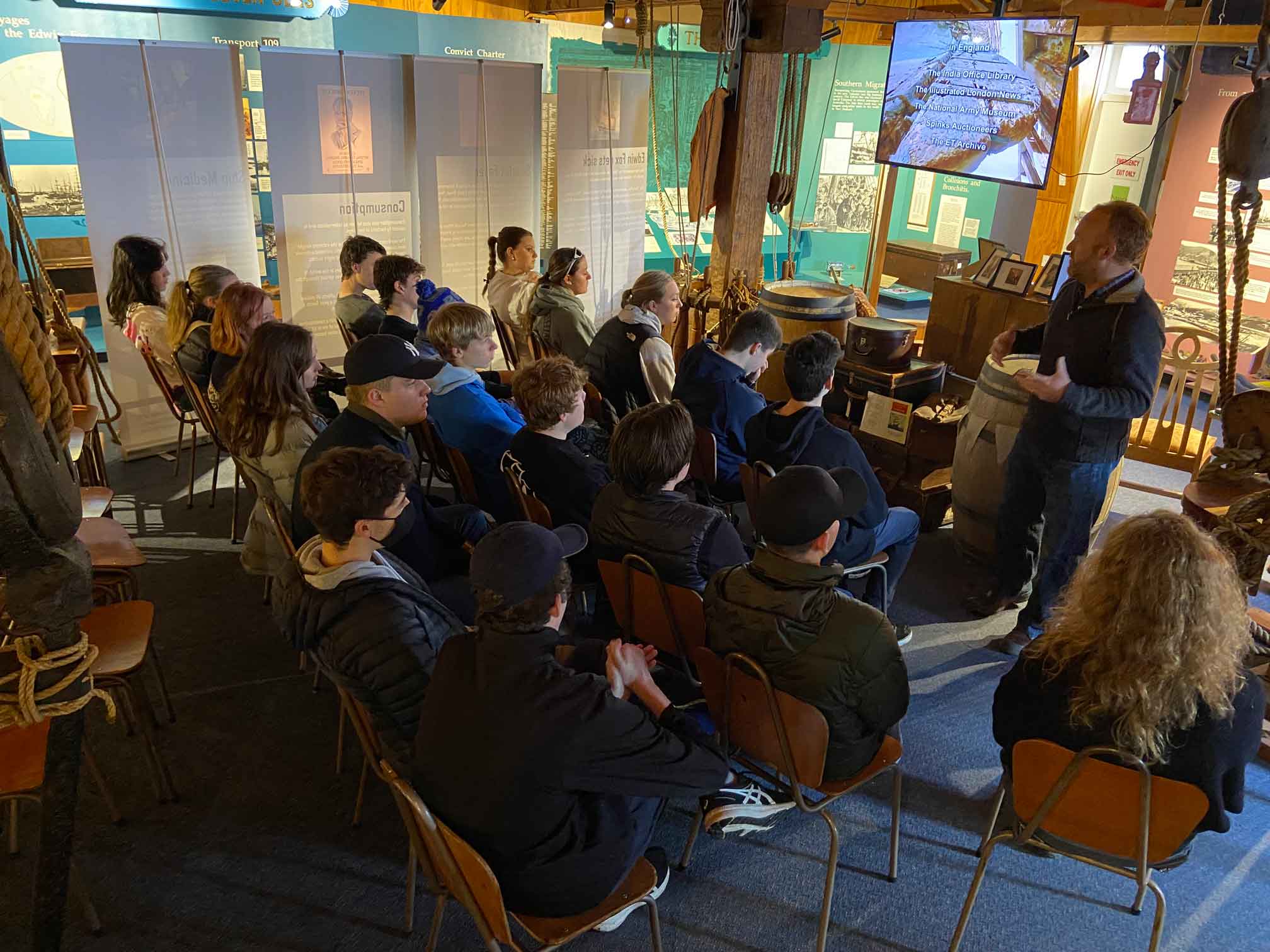
The historical significance in 2022 of boarding a ship that transported convicts to Australia was not lost on 19 Year 10 Australian students and 4 teachers from The Geelong College. To the group’s further amazement, the ship that first set sail over 169 years ago can be found not in Australia or the United Kingdom, but in the Edwin Fox Maritime Museum in Picton, Marlborough.
In touring the museum, the students learned about the diseases transmitted on a long journey that included scarlet fever and tuberculosis. They read about the crimes of the convicts and, in some cases, the particularly harsh sentences.
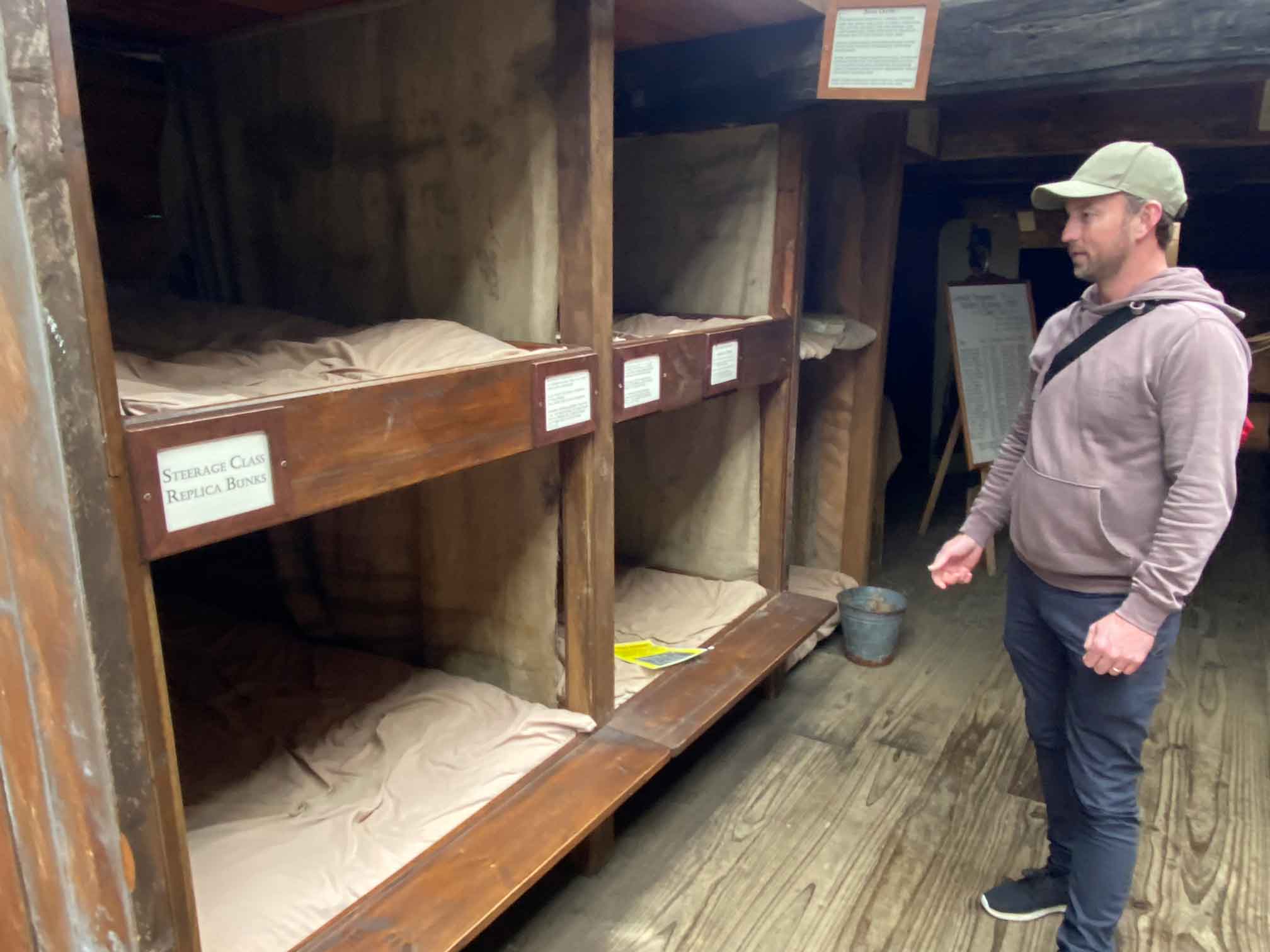
Once onboard the ship (in a dry dock for preservation), the students could handle the shackles of convicts and look inside a replica cell. The Cabin Class elite furnished their own small cabins. Smaller, cramped conditions indicated a more uncomfortable journey for many convicts and settlers. Below decks, in the hull of the ship, students stood where the cargo was once stored well below the waterline. All up, the students could see that this ship’s survival is a remarkable story.
Edventure Travel would be pleased to arrange your school’s or private group’s trip to the Edwin Fox for a personalised tour with one of the educators at the Museum. We can incorporate the Edwin Fox Maritime Museum into any tour to New Zealand. Please contact us for further details.

The Edwin Fox: What else makes it special
The Edwin Fox merchant ship was built in 1853 by the British in Kolkata India for the Anglo-Indian trade. The 50-meter-long wooden sailing ship is said to be one of the last East Indiamen designs, harking back to the heyday of British India.
For over 110 years, before the age of steamships became viable, the ship with three masts and solid hull sailed the globe transporting substantial ‘cargo’ including convicts, Empire and colonial troops, immigrants, and all kinds of goods, including spices, salt, beer, lamb and coal. The ship called into the ports of Cuba, Vietnam, Russia, Singapore, South Africa, France, Sri Lanka, America, Hong Kong, China, Mauritius and Thailand, trading its wares. It transported immigrants to Australia in its mid-years of operation and spent the final years acting as a refrigeration ship for the lamb industry and later a coal hulk, storing and transporting goods to larger ships departing New Zealand.
The Edwin Fox, having been overtaken by technology and age, was abandoned at its wharf. During the early 1960’s the ship was purchased for one shilling (ten cents!) and moved to a remote beach in the Marlborough Sounds of New Zealand until restoration could begin. It unfortunately sat there for 20 years and was exposed to the elements and daily tides eating away at its hull. Due to its historical significance, another push to save the ship started in the early 1980’s, its resurrection and preservation began. After an almighty refloating effort, led by volunteers, it was moved to Picton harbour in 1999, where carpenters, divers, renovators, and historical societies brought the ship back to life. Maritime historians pieced together all journeys from documents scattered around the globe.

Maritime records
The Edwin Fox holds many ‘firsts’, ’lasts’ and ‘only’ records and is of considerable historical significance to Australia and New Zealand. The Edwin Fox boasts of being:
- The only surviving ship that transported convicts to Australia (1858)
- The last wooden Crimea War troop carrier (1855)
- The oldest surviving merchant ship in the world
- The last of this ship design left in the world
- Capable of completing her first voyage to Australia (Melbourne) in 1856
- The first immigration transport on the Edwin Fox to New Zealand (Lyttleton) was in 1873
- A work-horse in Picton in 1897, working as a meat and coal barge for its remaining days until abandoned in the 1960’s
- Purchased for one shilling in 1965 by a historical society
- Towed to Picton, New Zealand, before preservation work began in 1985
- Recipient of the ‘World Ship Trust Award’ in 2013 for preservation
- Filmed for the BBC series ‘Coast’ in 2015
- The recipient of the first Australian secondary school group in September 2022, arranged by Edventure Travel.

Exploring the ship’s hull and decks
Today, exploring the ship’s decks and hull reveals its early links to the British Empire, the colonies of Australia and New Zealand, and the work-horse it became in the later years as a cargo barge. The wooden decks reveal the convict’s accommodation and the rules and regulations the convicts had to obey. On the upper deck, visitors can see Cabin Class (first class) for the wealthy travellers, and be astounded by the tiny sleeping quarters for immigrants (for example, up to 6 people would share one bunk berth). Diary entries re-tell personal stories of passengers and the hardships they endured sailing on the Edwin Fox where the journeys were dark, damp, and disease-ridden.
Descending into the largely intact hull reveals the 170-year-old craftsmanship that went into shipbuilding, with elbow joints, rivets, clamps, coak dowl and intricate frame joints all visible. Walking to the stern of the ship’s hull, a visitor can smell the damp, the spices, and the coal dust. The visitor can imagine the croaks and groans of a wooden ship on its voyages at sea. For the convicts who spent time below deck, this hull was their prison.

Convicts bound for Australia
The Edwin Fox transported convicts from England to Fremantle in Australia in 1858. Before the 86-day journey, the ship was fitted with cells to accommodate the all-male prisoner ‘cargo’. The British Government chartered the ship to transport 280 ‘superior type’ convicts and 82 passengers to Fremantle. The convicts were deemed a low-security risk. After nearly 3 months at sea, the ship docked in Fremantle in November 1858. The convicts were bound for the free settler colony at Swan River, now Perth, Western Australia.
A vivid picture of the convict’s journey is documented well in the ship’s log and historical records. Important points include:
- No prisoners or crew died on the journey to Australia, 3 babies were born to the guards family’s
- Only one convict was flogged on the journey
- The oldest prisoner was 59 years old, William Beresford (born in 1799)
- One clause in the crew’s agreement required that they “inflict corporal punishment on the convicts when required to do by the Master or Surgeon”

Convicts and crimes
Henry Jobson was the only convict flogged on the journey to Fremantle. He was a former soldier who had received a 14-year sentence for mutiny. An officer writing in his diary recorded that Jobson was flogged for ‘disobedience’.
Another convict, Peter Duff, was put in leg irons on the first day of the journey to Australia. He complained to the surgeon about the quality of the soup and the insufficiency of the rations “in an insolent and improper manner”.
One of the most unlikely convicts was Reverend W.D. Beresford (born in 1799) who presented a forged 100-pound bill. Found guilty, he was sentenced to be transported to Australia for the term of his natural life.
William Messenger was sentenced for “sacrilege”. His crime was to be caught urinating over a gravestone. His sentence length was 14 years. He was 19 years old when he drowned in a river outside the Swan River Colony.
Hans Jensen was a 40-year-old convict sentenced to transportation and 10 years prison for stealing 3 empty sacks.

References
Costley, Nigel, et al, Teak and Tide: The Ebbs and Eddies of the Edwin Fox, Nikau Press 2014
Edwin Fox Society, The Edwin Fox: Hard-Won Heritage, Picton, 2004
Further Reading
Convicts to Australia: A Guide to Researching your Convict Ancestors: http://www.perthdps.com/convicts/con-wa25.html
Crimean War Veterans in Western Australia: https://crimeanwar-veteranswa.com/ships/edwin-fox/
Solignac, Morgana, ‘Blenheim boy immerses Aussie students in Marlborough’s history’, Marlborough Express, 18 September, 2022:
Pictorial




Get in touch
Get in touch today to find out more information, request an itinerary or tailor your next trip.
Australia
17 Galtymore Close
Warranwood VIC 3134
Melbourne, Australia
Tel: 61-3-9876 5058
billy@edventuretravel.com.au
Vietnam
73 Ly Nam De Street
Hoan Kiem District
Hanoi, Vietnam
Tel: 84-4-943 8533
info@edventuretravel.com.au
Cambodia
No 62, Street 134
Sangkat Vealvong, Khan 7 Makara
Phnom Penh, Cambodia
Tel: 855-23-885391
mia@edventuretravel.com.au

Discover North Korea from the comfort of your classroom – part 2
In 2018, Edventure Travel’s Director Billy Penfold travelled to North Korea. Join him on a firsthand look inside North Korea’s education system, where you’ll uncover Soviet-style uniforms and strict student-teacher relationships.
Want more North Korea insights for your students? Be sure to check out part 1 of our North Korea series, which provides a snapshot of life in Pyongyang.

Education in North Korea: the view from a school
During his tour of North Korea in 2018, Billy visited two local schools. The first was an elite school in Pyongyang for students of privileged families. The second was a middle school in a small town, one hour’s drive from the capital.
While both school visits were carefully orchestrated, Billy says he gained an understanding of certain aspects of the education system. The limited resources of the second school, for example, were stark.
‘Naturally, the teachers showcased their best classrooms, which were equipped with rear-projection monitors, basic tape recorders, a blackboard, colour TV and old computers running the Windows XP operating system. Other classrooms we passed had only tables and chairs,’ Billy says.
Communist ideals are on display in every classroom. Photos revering North Korea’s communist leaders are pinned above blackboards, and students’ uniform red neckerchiefs show the legacy of Soviet influence.
‘The red neckerchief was adopted initially by the Soviet Union in the early 1920s. While its design is borrowed from Boy Scouts’ neckties, its triangular shape reflects the three Soviet organisations of communism – Young Pioneers, Communist Youth League, and the Communist Party of the Soviet Union. By wearing the scarf, students signify their strong bond to communism.’

High standards and tense classrooms
Watching an English language class at the middle school, Billy saw just how rigid North Korea’s teacher-student relationships are.
‘If a student wants to participate, they rapidly raise their hand, wait to be acknowledged by the teacher, stand to attention with a straight back, then practise their English in a loud, clear voice. When finished, students sit down abruptly.’
The pressure on students to demonstrate perfection echoed what Billy had seen at the Victory Day celebrations. From classroom to gymnasium, the atmosphere between students and teachers felt formal and tense.
‘The students danced, performed music and played table tennis without any sense of genuine pleasure, creativity or emotion. Their actions seemed robotic. They appeared under so much pressure to perform to a high standard that they couldn’t enjoy what they were doing.’

Posters and propaganda as school decor
Artwork in the school’s hallways balanced education with indoctrination. Posters of cute animals and healthy foods, typical of any junior school around the world, sat beside propaganda about North Korea’s nuclear weapons and military strength. In one hallway, a mural depicted graphic war scenes of US and South Korean soldiers committing atrocities against North Koreans. In another, US soldiers were shown being captured by North Korean soldiers.
‘I asked our chaperone teachers, “Why do they show such graphic murals along the walls for young students to see?” The answer was, “So our students never forget the history.”’ says Billy.
‘The question did not faze the teachers; it was a simple, matter-of-fact answer. One can only imagine the version of history students are taught, without access to alternative versions or perspectives.’
If you’re keen for your students to learn more about North Korea, be sure to check out our exciting incursions! Packed with case studies, photos and more, incursions are a great way to bring our expert knowledge of the world straight to your classroom.
Get in touch
Get in touch today to find out more information, request an itinerary or tailor your next trip.
Australia
17 Galtymore Close
Warranwood VIC 3134
Melbourne, Australia
Tel: 61-3-9876 5058
billy@edventuretravel.com.au
Vietnam
73 Ly Nam De Street
Hoan Kiem District
Hanoi, Vietnam
Tel: 84-4-943 8533
info@edventuretravel.com.au
Cambodia
No 62, Street 134
Sangkat Vealvong, Khan 7 Makara
Phnom Penh, Cambodia
Tel: 855-23-885391
mia@edventuretravel.com.au

How we develop new community projects, so you can have a lasting impact (Video + Pictorial)
Community projects – or service-learning programs, as they’re known among educators – can be one of the most rewarding parts of your educational tour. But how do they come about?
While there are millions of people we could work with across Asia, connecting with the communities most in need takes research. Here’s how we consult with locals to develop new community projects, based on our recent research trip to Vietnam and Cambodia in June 2022.
Meeting families in Vietnam’s remote northern villages
Travel three hours north of Hanoi, Vietnam, and you’ll find several remote villages. Tucked between mountains and rice paddies, life here seems idyllic.
But to truly understand the complex issues these communities face, and how to go about resolving them, you’ll need a local partner.
Our partners in northern Vietnam include members of the local People’s Committee, as well as village chiefs. In Vietnam, the People’s Committee is like a council. It leads development within a province, district or township, and has administrative authority over that area.
Before we head out into the villages, we meet our local partners to discuss what’s needed and what to expect. For example, they identify ahead of time which families, schools and services in each village are most in need of assistance.
“During our latest research trip, we went into the homes of several families. They were pre-chosen based on criteria like household income, the number of children in their care, the condition of their house, health issues and community support – or rather, the lack of it,” Billy says.
Watch our video to see some of the families we met in Vietnam’s northern villages:
Understanding communities’ genuine needs and goals
Acting as interpreters, the village chief and People’s Committee members help us talk with families to understand their needs and goals.
In some villages, physical repairs and improvements are the top priority.
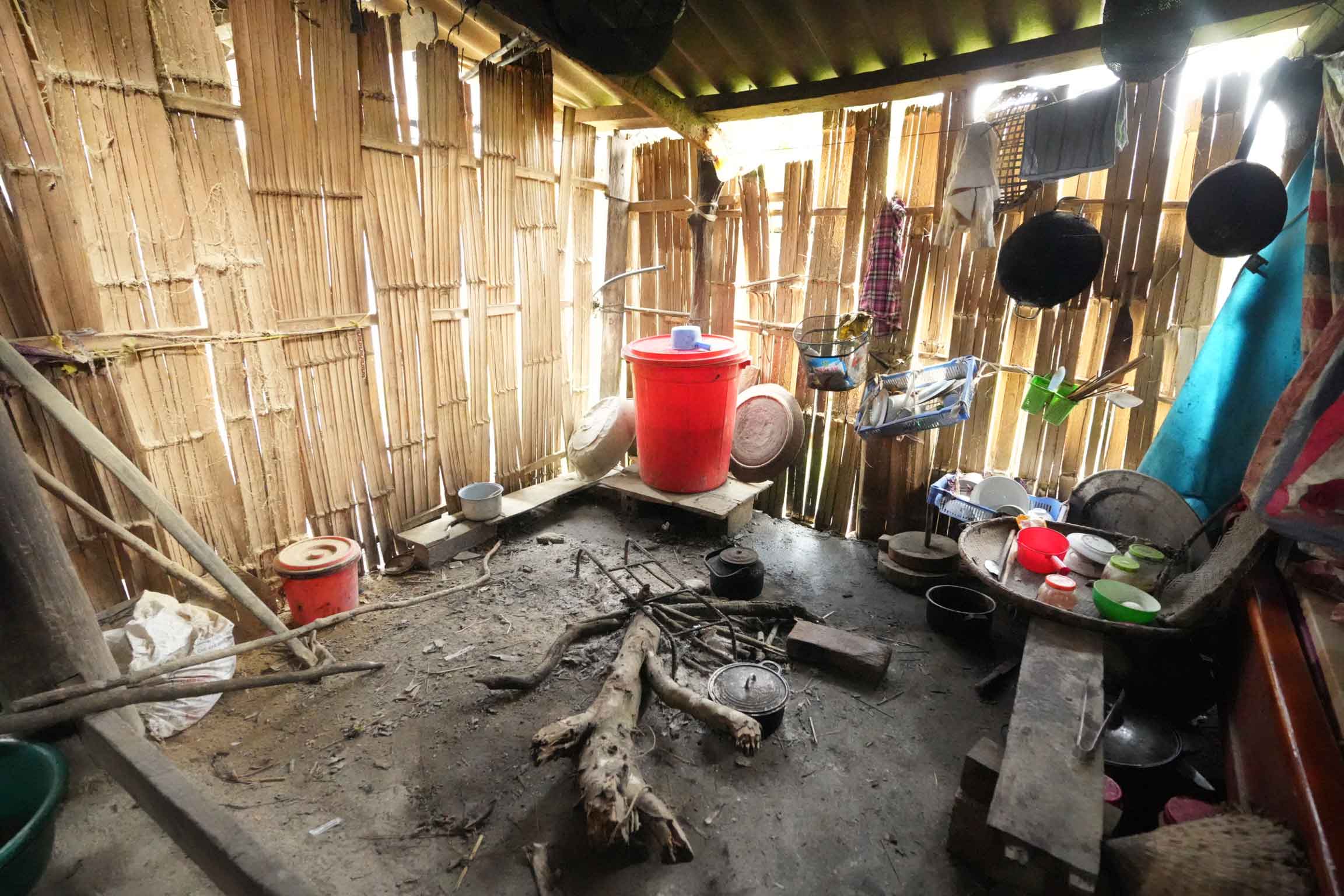
“Some families’ wooden and bamboo houses are leaking and almost falling over. They’d be freezing in winter. Others are without running water or have existing water storage facilities beyond repair. Rooves have missing tiles, and livestock wanders through the villages without suitable pens,” Billy says.
In other villages, education and social services are key. Some families can’t afford to send their children to school. And those children who are lucky to reach school have no uniforms or bikes.
“One school we visited lacked whiteboards and textbooks, there was no library, and the toilets were broken. Windows and door frames needed repairing and painting. In another school, there were just two toilets to service all the students,” Billy says.
“When we asked the school principal what he needed, he replied: ‘Everything.’”
But it’s not just the young who need support.
“Without social services, locals are left to age alone. For some, their partners went off to the city years ago and never returned. Now, they fend for themselves.”
Developing projects with local NGOs: from waste education to mangrove planting
Alongside residential construction and school renovation projects, we also look for other types of programs you can support.
For example, in Cambodia we met with a representative from a local Siem Reap NGO, who took us to visit villages who needed help with rubbish management.
“These villages are desperate for education on rubbish collection, storage and disposal. The NGO worker pitched us a practical program to improve the problem using minimal resources. The funding required will buy equipment, establish storage facilities and deliver educational programs,” says Billy.
This is an example of a community engagement program – a type of program that strives to solve entrenched issues through strong local relationships, such as a partnership with an NGO.
Environmental projects are another option for travellers. And after walking a kilometre through Mekong Delta mud flats, we found the perfect one.
In Vietnam’s Mekong Delta region, erosion from nearby flooded farmland has washed fertile soil out to sea. But by planting mangroves, you can stabilise the shoreline and provide an environment in which fish and birdlife can thrive.
“We met with an organisation undertaking a five-year project to plant mangrove trees. On the shoreline, local teams work in shifts planting trees until the tide comes in – then return the next day to continue planting at low tide. On-site, we discussed logistics, sustainability issues and future planting programs,” says Billy.
Bringing it all together: matching community goals with travellers’ needs
At the end of our research trip, we met with our team to review the list of potential community projects we’d found. We talked through logistics, safety issues and which time of year would be best to undertake each project.
To bring the most to our itineraries, each community project also needs to be within reach of other inspiring educational experiences. So, we reflected on another list we’d made along the way – a record of potential homestays we’d checked out, new trekking routes we’d mapped and even local hydropower dams we’d toured.
Of course, no community project research trip would be complete without checking on some of our previous programs. Near Siem Reap, we headed into the countryside to survey some recent construction projects. Two families had now moved into their houses, thanks to fundraising by an Australian school whose students have been touring Cambodia for over a decade.
“Ecstatic to see us, the first family explained how much their life had improved due to their new living conditions. As they showed off their home, the head of the family offered us each a coconut, which was stock from their new coconut delivery business,” Billy says.
“The second family explained that, thanks to the security of their new home, they now have much better paying jobs in town. Their new home can be locked up when they go out, so working away from home is no longer a problem.”
These families provide just one example of the life-changing impact you can have when you commit to a community project on your educational tour. Whether you choose a construction, environmental or community engagement project, you can be sure your effort will meet a genuine local need and make a lasting difference.
Ready to plan your next trip? Get in touch to discuss your school’s future travel program to Asia or New Zealand. Or for more inspiration, check our gallery of photos from the field, below.
Cambodia photos – available projects (house building and school renovations)


Vietnam photos – available projects (house building and school renovation projects)


Get in touch
Get in touch today to find out more information, request an itinerary or tailor your next trip.
Australia
17 Galtymore Close
Warranwood VIC 3134
Melbourne, Australia
Tel: 61-3-9876 5058
billy@edventuretravel.com.au
Vietnam
73 Ly Nam De Street
Hoan Kiem District
Hanoi, Vietnam
Tel: 84-4-943 8533
info@edventuretravel.com.au
Cambodia
No 62, Street 134
Sangkat Vealvong, Khan 7 Makara
Phnom Penh, Cambodia
Tel: 855-23-885391
mia@edventuretravel.com.au